How to do digital signature Signing on a mobile phone involves accessing a platform compatible with mobile devices, sending the document, identifying the signatories, setting up authentication, and completing the signature. The process can be carried out on both Android and iOS, but legal validity does not simply stem from the use of a mobile phone: it depends on the type of signature, authorship, integrity, and the requirements applicable to the document.
In practice, the smartphone allows you to complete virtually the entire workflow without relying on a computer. This includes creating the document, sharing the link via WhatsApp or email, filling in the data, signing with your fingerprint, and tracking its completion.
In this guide, we show you how to create a digital signature on your mobile phone in five steps using ZapSign and explain what precautions to take to avoid confusing the visual representation of the signature with the mechanisms that actually record authorship and integrity.
Summary
- Difference between electronic, digital, and qualified signatures.
- How to create an account and start the process using your mobile phone.
- How to send the document and register the signatories.
- How to use authentication and share the link via WhatsApp.
- The signatory completes the signature themselves via smartphone.
Quick facts
- Using a cell phone: under IBGEIn 2024, mobile phones were used by 98,8% of people who accessed the internet in Brazil.
- Modalities: a Law No. 14.063 / 2020 It differentiates between simple, advanced, and qualified electronic signatures.
- Sign up via smartphone: o Digital Government It also accepts cell phones or tablets as devices for selecting and signing documents through the GOV.BR service.
What is a digital signature and why can it have legal validity?
A digital signature is a type of electronic signature which uses cryptographic mechanisms to link an identity to a document and allow verification of its integrity.
When we talk specifically about qualified electronic signatures, the following comes into play: digital certificate Issued in accordance with the standards of the Brazilian Public Key Infrastructure, the ICP-BrazilExamples include different types of certificates, such as A1, A3, and... e-CNPJ.
This does not mean that every electronic document necessarily needs an ICP-Brasil certificate. Brazilian legislation also allows other types of electronic signatures, provided that the requirements applicable to the act are met and there are elements capable of proving authorship and integrity.
Therefore, simply stating that every signature made via mobile phone has the same legality is incorrect. legal validity The term "handwritten signature" would be too broad. Provisional Measure No. 2.200-2/2001 It recognizes documents produced with ICP-Brasil certification and, in its article 10, § 2, also preserves other means of proving authorship and integrity under the conditions stipulated by the standard.
The previous version of this article also cited a analysis of the STJ decision involving signatures not accredited by ICP-Brasil. The precedent reinforces the importance of electronic evidence, but the legal assessment continues to depend on the characteristics of the document and the specific case.
As a lawyer and founder of ZapSign, I see this evolution as something bigger than simply replacing paper with screens. I have already written about how Brazilian legislation has come to recognize different types of electronic signatures more clearly and to eliminate formalities that no longer make sense in certain digital documents. Technology needs to be accompanied by an equally up-to-date legal interpretation.
💡 Tip! Need a free digital signature? Click here and create yours now!
How to create a digital signature on your mobile phone in 5 steps?
The process can be done directly through the mobile browser, on both Android and iOS. The images below belong to the original tutorial and have been preserved to maintain the didactic content. As the ZapSign interface evolves over time, some buttons or visual elements may appear different in the current version of the platform.
Step 1: Register on the platform.
Start by accessing ZapSign through your mobile browser and creating an account. The business structure has changed since the original publication of this article: currently, the plans page offers Individual, Professional, Team, and Enterprise options.
The Individual plan is free and, on the current page, offers three documents per month. The resources and the price Details of paid plans should be checked directly on the current plans page, as they are subject to change.
Those who wish to start without hiring can use this option. free within the available limits.
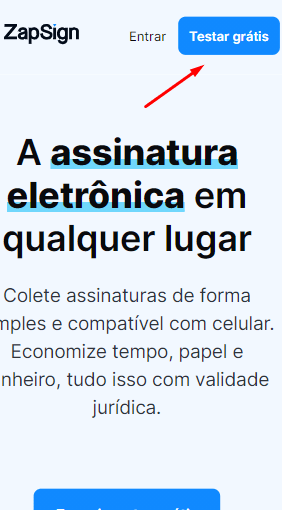
When accessing the ZapSign homepage on your mobile phone, choose the option to create or test an account.
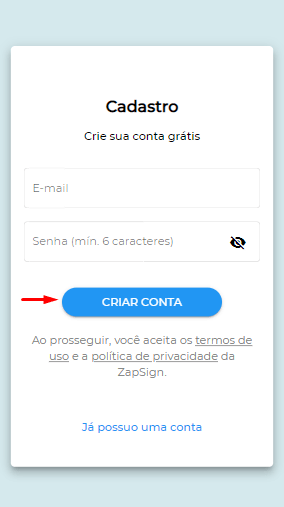
In the next step, provide the requested information to create your account. The available fields and methods may vary depending on the current version of the platform.
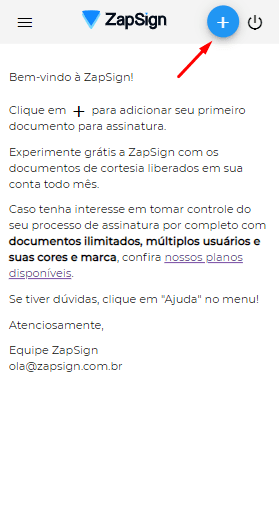
After registering, you will be directed to the environment where documents can be prepared and sent.
Step 2: Send the document via mobile phone.
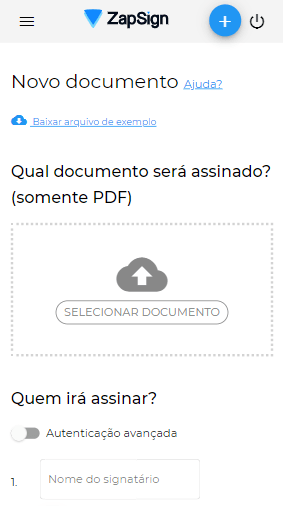
With your account open, start a new document and select the file stored on your phone or in a cloud service.
O PDF file It remains a practical choice because it preserves the document's layout. If file conversion is necessary, the original article suggested an application. available on Google PlayBefore using any converter, check the requested permissions and review the converted document.
Use the option presented in the interface to start the upload.
Select the correct document and verify that it is the final version. Values, names, dates, pages, and clauses should be reviewed before starting to collect signatures.
Step 3: Determine the signatories and authentication.
After uploading, specify who will participate in the signing process.

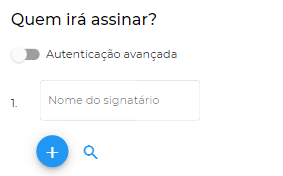
Depending on the plan and configuration chosen, it is also possible to use additional authentication or identification methods, including codes sent through different channels, selfies, identity documents, and other resources.
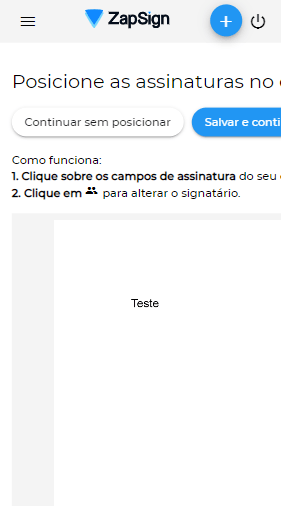
Next, choose whether you want to visually position the signature on the document. This field helps with readability, but it alone does not determine authorship or the validity of the process.
When we founded ZapSign, we had two principles that continue to guide my approach to this type of workflow: legal validity and simplicity. Additional security only makes sense when it protects without hindering. It's the same logic we've applied more recently when working with mobile network infrastructure to strengthen identity validation without creating unnecessary friction for the signer.
Step 4: Send the subscription link
With the document prepared, it's time to make it available to the participants.
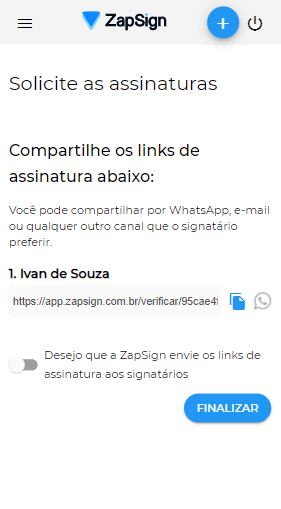
One option is to copy the link and share it through your chosen communication channel. If the conversation is already happening through... WhatsAppThe mobile phone itself makes this process particularly natural, as the recipient receives the address and opens the document on the same device.
There may also be options for automatic sending via email or WhatsApp, depending on the configuration and features available in the plan.
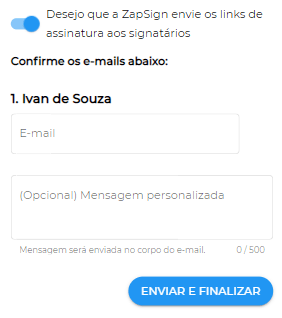
Review the recipient, message, and other details before completing the sending process.
Step 5: The signatory opens and signs via mobile phone.
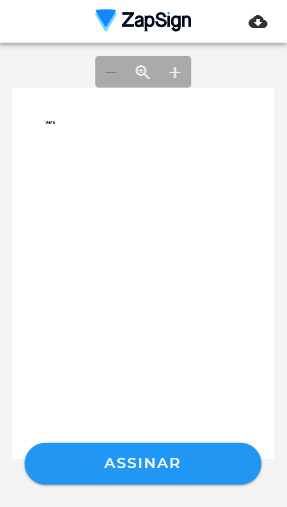
After receiving the link, the person opens the document on their smartphone and begins the signing process.
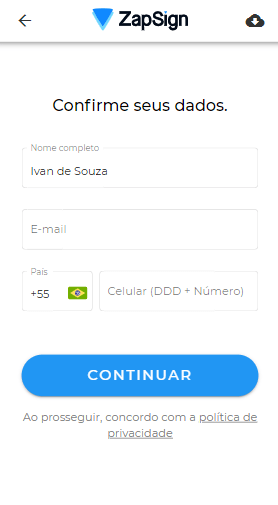
The requested data will depend on the configuration set for that document. Name, email, phone number, and additional authentication methods may be part of the flow.
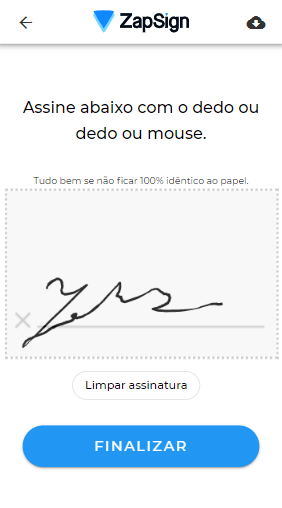
On the signature screen, it's possible to create a graphic representation with your finger. It doesn't need to perfectly reproduce the handwritten signature on the identity document: the drawing is only one part of the visual experience. Electronic records and authentication methods associated with the process are fundamental for the evidence.
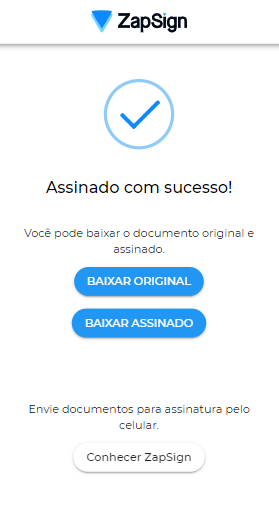
After completion, the document records the process performed, and the platform notifies the user that the subscription has ended.
| Stage | What is done on the cell phone? | Primary care |
|---|---|---|
| REGISTRATION | Creating or accessing an account | Review current plan and resources. |
| Document | File upload | Use the definitive version |
| Signatories | Registration and authentication | Match evidence to risk. |
| Shipping | Link sharing | Confirm recipient and channel. |
| Anual Subscription | Reading, data and signature on screen | Preserve the completed document and its records. |
⚠️ Also check out these related articles ????
➡️ Learn how to sign with a digital certificate
➡️ Understand what a digital signature verifier is for
➡️ What is a digital contract and how to adopt one for your company
What are the advantages of signing digitally via mobile phone?
The mobile phone doesn't just change the device used to sign up. In certain workflows, it eliminates the need to return to the computer, print files, or switch channels to complete a purchase.
Student Exchange
The main advantage is being able to complete the process regardless of where the parties are located. The signatory can open the document, check the information, and finalize the signature using their own device.
This also makes it easier to complete a digital contract when one of the parties is not in front of a computer.
The article already cited market compilations on the mobile use of electronic signatures, such as a survey according to which Part of the electronic document creation process is completed on mobile devices. and estimates regarding the volume of signatures made on smartphonesThese links are preserved, but official IBGE data is now a more appropriate reference for assessing the presence of cell phones in Brazil.
Speed
The speed comes mainly from reducing steps: the link can arrive via message, be opened immediately, and proceed to signature without printing, scanning, or physical transport.
The previous version linked this speed to the performance of sites and he quoted one old Google benchmark Regarding mobile loading times, these factors remain relevant to the digital experience, but they do not support the claim that websites are necessarily faster on mobile than on a computer.
For companies that maintain their own websites, the quality of online support on the website And the mobile experience also influences how easily a user starts or completes digital processes.
greater reach
In Brazil, mobile phones are the primary device used to access the internet. According to official IBGE data from 2024, 98,8% of people who used the internet accessed it via mobile phone.
The original version of this article quoted older data on internet access via mobile phoneThe link remains intact, but the update uses the most recent IBGE (Brazilian Institute of Geography and Statistics) figures to contextualize the current reach of the smartphone.
This scale helps explain why I consider mobile a central part of the subscription experience, and not a secondary adaptation of the desktop version. More recently, when working with mobile network technology to strengthen identity validation, the concern remained the same: to bring more security and governance without turning the subscriber's journey into an obstacle.
Now that you know how to make digital signature on mobileYou can choose a workflow that is compatible with the document and the evidence your operation needs to preserve. To try ZapSign on your smartphone, Simply access the platform via your mobile phone..
Frequently Asked Questions (FAQ)
Access a mobile-compatible platform, upload the document, define the signatories and authentication methods, share the link, and complete the signing directly from your smartphone. The process works on both Android and iOS without needing to print the file.
Select the PDF stored on your device or in the cloud, upload it to the signing platform, register the participants, and configure the process. The signer receives access, reviews the content, and completes the signing directly on their mobile phone.
Yes. There are services with free usage within certain limits. On ZapSign, the current plans page shows a free Individual plan. The number of documents and available features should be checked before use, as they may change.
The person responsible for the document can share the signature link via WhatsApp. The signatory taps on the link, opens the document on their phone, completes the identification steps outlined in the workflow, and finishes signing without needing to receive the physical file.
It may have legal validity, but the fact that it was made on a cell phone is not the determining factor. It is necessary to consider the type of signature, proof of authorship and integrity, recorded evidence, and any formalities required for that document.

Getúlio Santos is the CEO of ZapSign, a lawyer, technology enthusiast, and entrepreneur.